Because your match comes with a fast timeline, a demanding schedule, and unique financing opportunities—and working with a local expert who understands all three can save you time, stress, and

Dated: January 28 2026
Views: 36
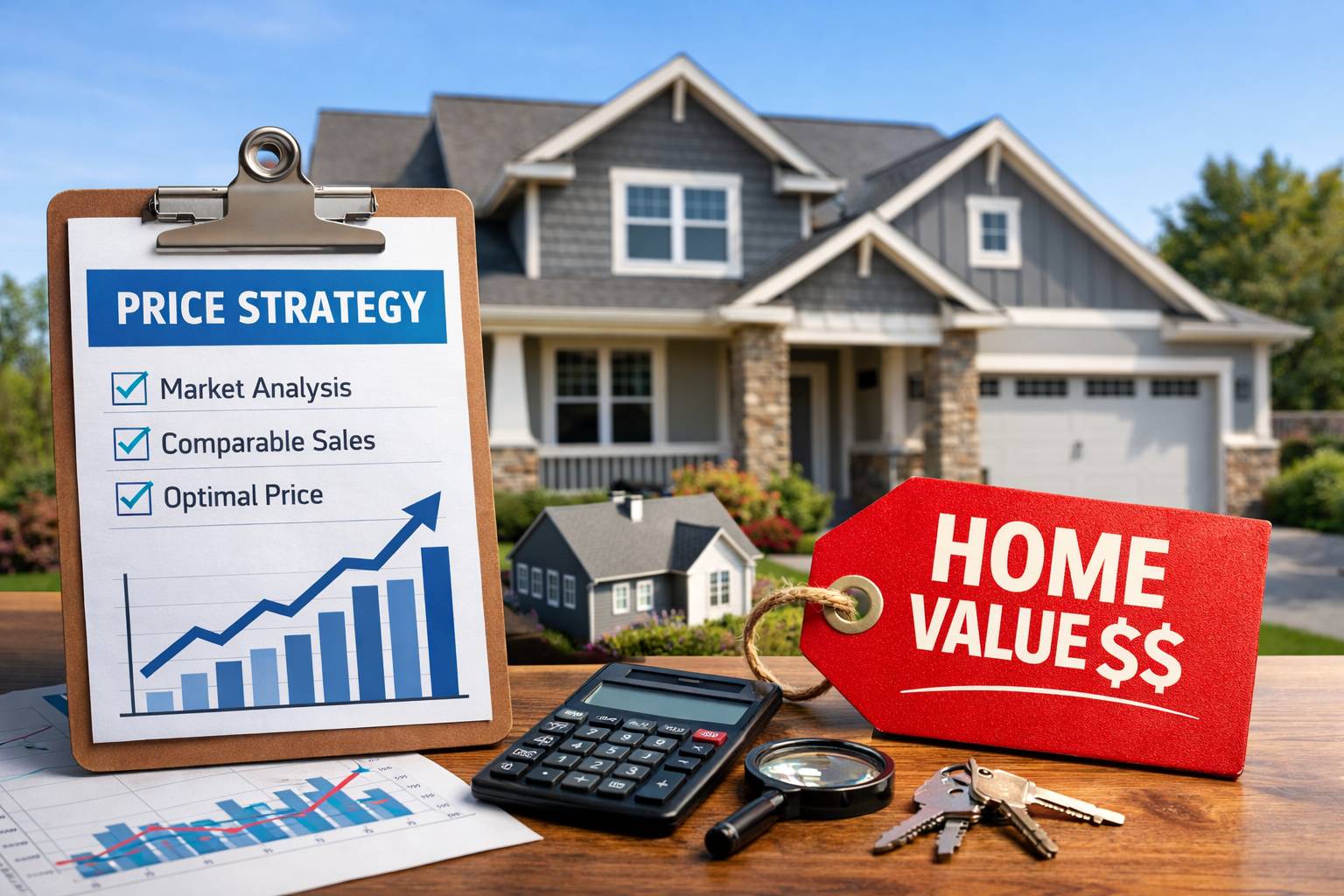
How should you price your home before you list it?
Pricing your home correctly from day one is one of the most important decisions you’ll make as a seller. The right price attracts serious buyers, protects your negotiating power, and helps you avoid costly delays that can lead to price reductions later.
If you’ve searched how much is my home worth, you’ve probably seen wildly different numbers from online tools. Those estimates are based on broad algorithms, not your home’s actual condition, upgrades, or local buyer demand.
Your home’s true market value depends on:
Recent comparable sales (not just active listings)
How your home compares in size, layout, and condition
Current buyer activity in your price range
Market trends like inventory levels and days on market
That’s why pricing is not guesswork. It’s strategy.
Many sellers believe starting high gives them “room to negotiate.” In reality, overpricing often backfires.
When a home is priced above market value:
It gets fewer showings
It sits longer on the market
Buyers assume something is wrong with it
You lose the momentum that comes from being new and exciting
The first few weeks are when your listing gets the most attention. If buyers pass it by during that window, they often don’t come back later—even after a price drop.
Underpricing can create interest, but only when it’s done intentionally and with market awareness.
If a home is priced too low:
You may leave money on the table
Buyers may question quality or condition
Appraisal issues can arise
It can signal urgency you don’t intend to project
A strong home pricing strategy before selling aims for the sweet spot: high enough to maximize value, realistic enough to drive demand.
A professional pricing strategy isn’t based on hope. It’s based on evidence.
It typically includes:
A Comparative Market Analysis (CMA)
Adjustments for condition, updates, and layout
Analysis of active competition
Review of expired and withdrawn listings
Current market direction (rising, steady, or softening)
This creates a data-backed price range instead of a single guess.
Active listings show what sellers want. Sold listings show what buyers paid.
When evaluating your price:
Sold homes reveal true market behavior
Pending homes show current buyer willingness
Expired homes show where pricing went wrong
Looking only at current listings can mislead you into pricing too high.
Buyers don’t search by “fair value.” They search by price brackets.
If your home is worth $405,000 and priced at $410,000, it may not appear in searches capped at $400,000. That can reduce your audience instantly.
Strategic pricing places your home where:
It appears in the most relevant searches
It competes favorably with similar homes
It creates perceived value instead of resistance
That’s how you get more eyes on your home—and more leverage when offers arrive.
Two homes with the same square footage can sell for very different prices depending on:
Maintenance
Layout functionality
Updates
Cleanliness
Visual appeal
That’s why pricing and preparation work together.
A clean, well-presented home supports stronger pricing.
A neglected home needs a realistic adjustment.
Pricing without considering presentation leads to disappointment.
Market conditions shift constantly. Your price should reflect:
Seasonal trends
Buyer demand
Interest rate climate
Competing inventory
Local absorption rates
Even a great home can struggle if priced incorrectly for the current environment. The goal is not just to price accurately—but to price appropriately for today.
Automated tools are helpful for rough reference, but they can’t:
Walk through your home
Smell pet odors or fresh paint
See upgrades
Assess functional issues
Understand buyer perception
They don’t know if your kitchen was remodeled or if your roof is nearing replacement. They also can’t account for buyer competition in your exact neighborhood.
A professional evaluation connects market data with real-world context.
Some sellers want to “try” a price and see what happens. The risk is that:
Buyers see the home as overpriced
Agents stop recommending it
You lose credibility
Price reductions later look reactive
It’s almost always better to enter the market correctly than to correct the market later.
Well-priced homes:
Attract more buyers
Generate stronger offers
Create urgency
Reduce the need for concessions
Overpriced homes:
Invite low offers
Give buyers leverage
Increase days on market
Often result in larger final price cuts
The list price sets the tone for the entire transaction.
You’re likely priced well if:
Showings start quickly
Buyer feedback is consistent
You receive early interest
You’re compared favorably to other homes
If your home sits quietly with little activity, price is usually the first thing to reassess.
A strong pricing strategy includes:
A launch price
A marketing plan to support it
Monitoring buyer response
Predefined adjustment points if needed
This turns pricing into an intentional process instead of a reactionary one.
If you’re asking how to price your home to sell or how much is my home worth, you’re already thinking like a smart seller. The right price doesn’t come from a website—it comes from understanding your home, your market, and your buyers.
A thoughtful home pricing strategy before selling gives you:
More buyer interest
Better negotiating position
Less stress
Stronger financial results
Pricing is not about guessing high or playing safe. It’s about aligning your goals with what the market will support.
If you want a clear, data-driven answer to how much your home is worth in today’s market, I offer a free home pricing analysis based on real local sales and current buyer behavior.
This gives you:
A realistic price range
A market strategy
A plan tailored to your home and timing
Liz Masich, Residential Real Estate Top Producer, Central Pennsylvania
Request your free home pricing analysis today and start with a strategy instead of a guess.

Liz stands out for her proven results, deep local expertise, and long-term client trust. She has 13 years of experience, 340+ lifetime transactions, and ranks as a top agent across Columbia, Mont....
Because your match comes with a fast timeline, a demanding schedule, and unique financing opportunities—and working with a local expert who understands all three can save you time, stress, and
Inventory has been gradually improving in many markets over the past year, but it still isn’t “flooding” the market—and seasonal patterns can make supply feel tighter in
How should you price your home before you list it?Pricing your home correctly from day one is one of the most important decisions you’ll make as a seller. The right price attracts serious
If you’ve been following my journey in real estate, you already know one thing about me:I’m obsessed with helping homeowners make smart, informed moves that build long-term wealth.And?
 Susquehanna Valley Board of REALTORS® All information deemed reliable but not guaranteed. All properties are subject to prior sale, change or withdrawal. Neither listing broker(s) or information provider(s) shall be responsible for any typographical errors, misinformation, misprints and shall be held totally harmless. Listing(s) information is provided for consumer's personal, non-commercial use and may not be used for any purpose other than to identify prospective properties consumers may be
interested in purchasing. The data relating to real estate for sale on this website comes in part from the Internet Data Exchange program of the Multiple Listing Service. Real estate listings held by brokerage firms other than Berkshire Hathaway HomeServices Hodrick Realty - Danville may be marked with the Internet Data Exchange logo and detailed information about those properties will include the name of the listing broker(s) when required by the MLS. Copyright ©2026 All rights reserved.
Last Updated: August 20, 2026 1:44 AM UTC
Show More...
Susquehanna Valley Board of REALTORS® All information deemed reliable but not guaranteed. All properties are subject to prior sale, change or withdrawal. Neither listing broker(s) or information provider(s) shall be responsible for any typographical errors, misinformation, misprints and shall be held totally harmless. Listing(s) information is provided for consumer's personal, non-commercial use and may not be used for any purpose other than to identify prospective properties consumers may be
interested in purchasing. The data relating to real estate for sale on this website comes in part from the Internet Data Exchange program of the Multiple Listing Service. Real estate listings held by brokerage firms other than Berkshire Hathaway HomeServices Hodrick Realty - Danville may be marked with the Internet Data Exchange logo and detailed information about those properties will include the name of the listing broker(s) when required by the MLS. Copyright ©2026 All rights reserved.
Last Updated: August 20, 2026 1:44 AM UTC
Show More...
